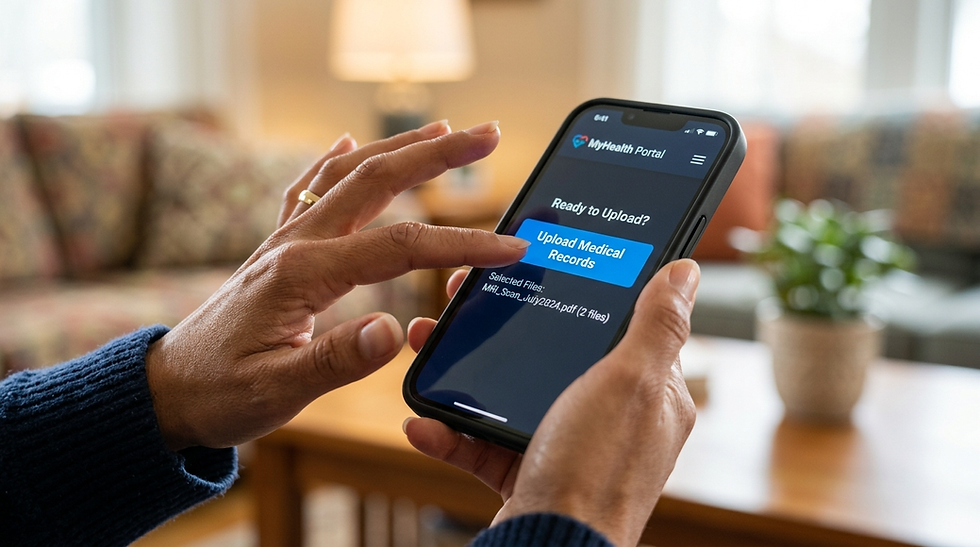
The Human Premium: Why Artificial Intelligence Expands Healthcare Jobs


We look at the objective evidence showing why automation will create new clinical roles rather than eliminate them.
Many predict that artificial intelligence will eliminate medical jobs, but the objective evidence points to a massive expansion of patient care driven by the human premium.
Takeaways
Demand expansion: Automation increases patient access to care.
The human premium: Doctors maintain clinical trust and empathy.
Physical presence: A machine cannot replace an embodied clinician.
New specialties: Emerging roles will manage continuous data streams.
Behavioral coaching: Humans drive lifestyle changes better than software.
The introduction of artificial intelligence into clinical settings brings cascading effects to the job market. Most conversations treat this technology as a labor replacement story, assuming machines will systematically replace doctors and nurses. The objective evidence points in a completely different direction. We are looking at a story of demand expansion. By lowering the cost and complexity of data analysis, artificial intelligence opens medical services that were previously too expensive or operationally impossible to scale.
The technology can perform cognitive tasks rapidly. It can read a scan or sort a database. But it cannot replace the human premium. This is the value derived from trust, physical presence, and legal accountability. As machines handle the data processing, the demand for human professionals who can translate that data into patient care will grow. This democratizes continuous care.
The Science: From Episodic Treatment to Continuous Care
For decades, the gold standard of medicine has been reactive. A patient feels sick, schedules an appointment, and receives a diagnosis based on a single moment in time. This creates a diagnostic bottleneck. Doctors rely on limited snapshots of data, which leaves massive gaps in observation.
Artificial intelligence changes the basic economics of this process. It reduces the cost of continuous data analysis to near zero. This leads to an unprecedented expansion of possibilities, allowing us to monitor patients around the clock using wearable devices and home sensors. This shift is the culmination of years of digital health research.
To circumvent the diagnostic bottleneck, the industry is moving toward a new model.
The historical baseline: Medical care is episodic. A physician reviews a static blood test or a singular electrocardiogram during a fifteen-minute visit. The process relies heavily on patient memory and acute symptoms.
The new technology: Medical care becomes continuous. An artificial intelligence system ingests thousands of data points a day from a patient's wearable. It filters out the noise and flags the exact moment an anomaly occurs, providing clinicians with a complete physiological history.
Economists refer to this as the elasticity of demand. When the price of a service drops, the public consumes more of it. Cost and complexity are massive barriers to care. By using artificial intelligence to reduce the price of data analysis, we remove those barriers. Patients who previously could not afford preventative screening will gain access to continuous health monitoring. The demand for care will surge. This means the medical system will need more people, not fewer, to handle the increased patient volume entering the clinic.
The machine detects the anomaly. But a human must close the loop. When a cardiac monitor flags an irregular heartbeat at two in the morning, an algorithm cannot hold a frightened patient's hand. A machine cannot explain the clinical reality to a worried family.
An Expert's Perspective: The Human Premium in Clinical Settings
We must recognize that human patients respond to human clinicians. This is the core of the human premium. It operates across several specific categories that algorithms cannot duplicate.
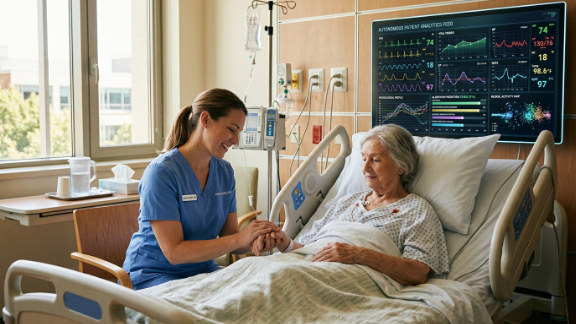
First is the relationship and trust. Medicine requires memory and accumulated rapport.
Second is embodied presence. A nurse physically standing in a hospital room provides a therapeutic benefit that software cannot replicate.
Third is accountability. When a diagnosis is made, a human professional must hold the legal and ethical responsibility for the outcome. Finally, there is behavior change.
Patients are biologically wired to follow the advice of other humans over the instructions of a computer screen. A machine can provide the correct dietary plan, but a human coach provides the social pressure and empathy required to change a lifelong habit. The human premium is irreplaceable.
Because of this human premium, the implementation of automated systems will create entirely new job categories within healthcare. We can anticipate the rise of specific roles designed to manage this new infrastructure. These jobs will require a blend of technical literacy and deep interpersonal skills.
Continuous Care Directors: These professionals will act as the human layer between patients and automated monitoring systems. When an algorithm detects an issue, the director manages the moments that matter, translating the technical alert into a calm, actionable clinical plan.
Care Plan Outcome Specialists: These individuals will own the gap between medical advice and real-world execution. If an algorithm suggests a strict dietary change, the specialist addresses the practical barriers of fear, cost, and habit formation to ensure the patient actually follows through.
Health Data Operations Specialists: These technicians will manage the reliability, governance, and clinical usability of the massive data streams flowing from wearables and remote labs. They provide the human accountability required to guarantee the data is safe to use for medical decisions.
The Road Ahead
The shift toward continuous, algorithm-assisted care is a game-changer. We now have the tools to catch pathology before it causes severe damage. But we must balance this technological capability with strict prudence.
Future implementation relies on the development of strong clinical frameworks. We cannot simply plug algorithms into patient networks. Remaining regulatory hurdles are massive. The United States Food and Drug Administration (FDA) requires strict change-control protocols for software that learns over time, requiring developers to demonstrate that their systems remain safe after every update. We also face serious questions regarding medical liability. If an algorithm misses a critical diagnostic signal and the human specialist does not catch it, the legal system must clearly define who is at fault. The World The
Health organizations continue to stress that human autonomy and accountability must remain at the center of medical technology.
The long-term human impact of this shift is positive. By assigning repetitive data processing to machines, we free up the schedules of our doctors and nurses. The American Medical Association notes that reducing the administrative workload returns the focus of medicine back to the patient. The future of healthcare is not a machine replacing a doctor. It is a highly capable machine providing objective evidence to a human clinician who uses trust, empathy, and accountability to heal the patient. The science is sound. The human connection remains the final cure.
FAQs
Will artificial intelligence replace human doctors?
No. It will handle data analysis, allowing doctors to focus on patient relationships and complex medical decisions.
What is the human premium?
It is the specific value that only humans can provide, including trust, physical presence, legal accountability, and empathy.
How does continuous care differ from episodic care?
Episodic care reacts to symptoms during short clinical visits. Continuous care uses wearables to monitor patient health constantly.
What does a Continuous Care Director do?
This new role acts as a human bridge between automated data alerts and the patient, translating technical data into actionable care plans.
Why do we need human accountability in medicine?
Algorithms cannot hold legal or ethical responsibility. A human professional must verify the data and take responsibility for the final diagnosis.