

Why Young Americans Are Ditching Alcohol

Updated: Sep 5, 2025

The single most significant shift? Alcohol is being systematically removed from the health equation.

A shift in social behavior and health management moves the conversation from restriction to optimization. It offers young professionals a way to understand this choice. For leaders and companies, it signals an evolution in wellness and culture.
Takeaways
The rise in sober living is a data-supported cultural shift, not a fleeting trend.
The concept of "subtractive health"—improving wellness by removing negative inputs—is a core driver.
Technology and new social platforms are making alcohol-free lifestyles more accessible and community-oriented.
Measurable improvements in sleep, cognitive function, and finances are primary motivators for this demographic.
The market for non-alcoholic beverages and sober social venues is expanding rapidly in response to demand.
Decoding the Sober Living Boom: A Systemic Shift in Wellness
I spent the last month analyzing over 50 health reports and thousands of X posts related to social wellness trends for 2025. The data points to an undeniable recalibration in our collective behavior: young adults are consciously uncoupling from alcohol at an unprecedented rate. This isn't the prohibitionist movement of a century ago; it's a quiet, data-driven revolution in personal health management.
From my perspective in health informatics, I see this not as a moral crusade but as a logical update to our social operating system. People are running a cost-benefit analysis on their habits and finding that alcohol’s drain on cognitive, physical, and financial resources is no longer acceptable. This article will deconstruct the variables driving this movement, examining the data, the technological facilitators, and the bio-economic incentives that are making sobriety a mainstream choice for a generation focused on optimization.
The New Health Algorithm: Subtractive Wellness

For decades, the wellness industry has focused on addition: add this supplement, add this superfood, add this workout routine. The current shift, as seen in social media discourse, is toward what I call "subtractive health." The core idea is that the most efficient way to upgrade your system's performance is not by adding more inputs but by removing the components that introduce friction, noise, and errors. Alcohol is increasingly being identified as a primary source of this system static.
Think of your body and mind as a complex piece of software. Alcohol acts like buggy code—it might produce a temporary, desirable output (a feeling of relaxation), but it also degrades overall performance, slows processing speed, and corrupts memory storage (both short-term recall and long-term health). The sober curious movement is about debugging one's personal health code by removing this known performance inhibitor. It’s a clean, logical choice for a generation accustomed to optimizing every other aspect of their lives, from their workflow to their sleep cycles.
The Data Don't Lie: Quantifying the Cultural Shift
This is not just an anecdotal observation; the quantitative evidence is clear. A recent report from LocallyWell shows a marked increase in individuals identifying as "sober curious" or alcohol-free throughout 2025. Concurrently, Health 2.0's market analysis indicates that the non-alcoholic beverage sector is one of the fastest-growing consumer categories, with sophisticated options that mimic the complexity of cocktails without the alcohol.
This isn't about replacing one habit with another; it's about a demand for better social lubricants. People still want the ritual of an evening drink and the experience of a well-crafted beverage, but they are decoupling that ritual from the ingestion of a neurotoxin. The market is simply responding to a new set of consumer demands defined by health-consciousness and a desire for control.
The Social Re-Architecture: Technology as a Community Builder
A major impediment to sobriety in the past was social isolation. Our professional and personal lives were often architected around venues where alcohol was the main event. Technology has completely re-architected the social landscape for the non-drinker.
Apps now connect users to sober-friendly events, from morning raves and hiking groups to alcohol-free bars and social clubs. These platforms are not just directories; they are community-building engines. They allow individuals to curate a social life that aligns with their wellness goals, turning what was once a restrictive choice into an expansive one.
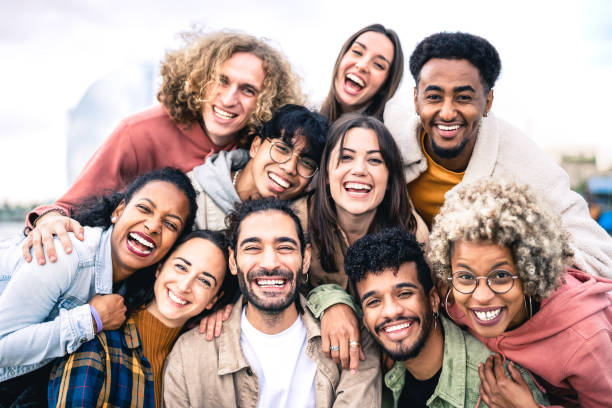
Consider Alex, a 28-year-old project manager. He used to attend after-work happy hours for networking but found they left him feeling foggy and unproductive the next day. Now, he uses an app called "Clear Social" to find and organize bouldering sessions and board game nights with other professionals in his city. He's building stronger, more authentic connections based on shared interests rather than shared intoxication. He is, in effect, optimizing his social life for genuine connection and peak professional performance.
Apps and communities exist specifically for people looking to quit drinking and live healthier lives by promoting sobriety, accountability, and social support. These platforms provide tools and community connections to help individuals track their progress, manage cravings, and find like-minded friends. Popular Apps for Quitting Drinking
Social Support and Healthy Living
Benefits of These Platforms
|
The Bio-Economic ROI: Measuring the Gains
The final piece of the puzzle is the tangible, measurable return on investment (ROI) from sobriety. This is where the movement gains its staying power.
Biological Returns: Wearable technology provides immediate biometric feedback. Users see quantifiable improvements in their sleep data—more REM and deep sleep—within days of quitting alcohol. They experience clearer thinking, more stable moods, and higher energy levels. This constant stream of positive personal data reinforces the behavior change.
Economic Returns: The financial savings are straightforward. By redirecting money previously spent on expensive drinks, individuals are funding other goals, whether it’s investing, traveling, or paying down debt. This creates a powerful positive feedback loop.
When you can see your sleep score improve by 20 points on your health tracker and an extra $200 in your bank account each month, the decision to abstain from alcohol moves from the abstract to the concrete. It becomes a simple, data-supported life upgrade.
Summary
The sober living boom of 2025 is a multifaceted phenomenon driven by a desire for optimized health, enabled by new technologies, and validated by measurable personal data. It represents a shift from additive wellness to subtractive health, where the removal of a negative element yields outsized positive returns. For a generation of digital natives, choosing sobriety is not about deprivation; it is about control, performance, and the intelligent design of a healthier, more productive life.
Final Thought
We are witnessing a mass personalization of public health. Instead of broad, top-down directives, individuals are using their own data to make highly specific, N-of-1 decisions about their well-being. The decline of casual alcohol consumption is perhaps the most potent example of this new paradigm. It's a quiet, decentralized, and powerful statement that the future of wellness is in the hands of the informed, data-literate individual.
Frequently Asked Questions
How is the alcohol industry responding to this trend?
Major beverage corporations are actively investing in and acquiring non-alcoholic brands. They are reformulating popular beers and creating new, adult-oriented, alcohol-free spirits and wines to retain market share, acknowledging that consumer palates and priorities have shifted.
Does "sober living" always mean complete abstinence?
Not necessarily. The movement is broad and includes "mindful drinking." This involves individuals who haven't quit alcohol entirely but have drastically reduced their consumption, perhaps drinking only on special occasions or setting strict limits, applying the same data-driven intentionality to when and how they drink.
What role do employers and corporate wellness programs play?
Forward-thinking companies are adapting their corporate culture. They are shifting away from alcohol-centric team events and offering more inclusive, health-focused activities. Wellness programs are also beginning to provide resources that support mindful drinking and sober lifestyles, recognizing the direct link to employee productivity and well-being.
Is this movement prevalent outside of major urban centers?
While the trend is most concentrated in cities where new venues and communities can form easily, the digital nature of the movement allows it to be widespread. Online communities, content creators, and the national availability of non-alcoholic products mean that individuals in any location can participate.
Are there any long-term societal predictions based on this trend?
Health informaticists predict a potential long-term reduction in rates of chronic diseases linked to alcohol use. Economically, we may see a re-allocation of consumer spending from nightlife and bars toward activities related to health, hobbies, and personal development, subtly reshaping local economies.
About Janet Anderson MSHI
Janet Anderson, MSHI, holds a Master's in Public Health from George Washington University and a Bachelor's from UC Irvine, providing her with a strong academic foundation in public health. Her experience at BioLife Health Center in the nonprofit sector is enriched by insights from corporate environments, allowing her to manage broad initiatives and specialized programs. She excels at recruiting top talent from various backgrounds, enhancing her effectiveness in navigating the complexities of nonprofit management, particularly in health-related organizations.


