

The Unseen Health Benefits Of Having A Pet At Home

Updated: May 3

Raising animals teaches young children how to care for their environment. Pets have a positive impact on mental health at home.

Pets teach children how to care for others. They improve mental health and build strong immune systems. As an environmental health director, I believe raising animals helps families build better habits. This truly changes how a community grows and stays healthy.
Takeaways
Pets lower stress for children and parents.
Daily chores teach kids how to care.
Walking dogs improves neighborhood air quality awareness.
Animals build stronger immune systems at home.
Pet ownership supports community mental health programs.
I manage environmental health programs at BioLife Health Research Center. Most of my day is spent making sure the water you drink is clean, and the air you breathe is safe. I work with diverse teams and tight budgets to build better community health.
But here's the thing. A healthy environment doesn't just happen outside. It happens right inside your home. I've noticed a trend in the child development data. Parents often ask what they can do at home to build better habits for their kids. They want a quick fix. I usually tell them to get a pet.
Let me explain why.
Building the Immune System
We talk a lot about clean air and water. But kids actually need some exposure to dirt and germs to build a strong immune system.
When you bring a dog or a cat into the house, they bring the outside world with them. They carry microbes. Those microbes train a child's body to fight off allergens. The National Institutes of Health found that exposure to animals early in life can actually lower a child's risk of developing certain allergies.
This helps keep kids out of the doctor's office. Fewer sick days mean lower medical bills for families. That's a massive win for public health on a limited budget.
Learning How to Care
A community stays healthy when people care about their surroundings. You have to learn that skill somewhere.

Pets teach kids responsibility. A dog needs to be walked. A cat needs its litter box cleaned. A fish needs food every single morning. Kids learn how to put another living creature before themselves. They learn a routine.
The Centers for Disease Control and Prevention reported that pet ownership helps children improve their emotional health and reduces the risk of childhood anxiety. And I think that makes total sense. A pet is a constant friend. A dog doesn't judge a kid for making a mistake at school. A cat just sits there and listens.
Mental Health at Home
We spend a lot of time and money on community mental health programs. But a pet is like a built-in support system.

When you pet an animal, your brain releases a chemical that makes you feel happy. WebMD notes that eye contact with a dog can release oxytocin, a natural mood booster. This lowers stress for the whole family. The Mayo Clinic also notes that the companionship of a pet combats loneliness and gives people a clear sense of purpose.
I see this in our community programs. Families with pets often handle stress better. The kids are calmer. The parents have a reason to step away from their work screens and go outside.
Getting Outside
Physical activity is another big piece of the puzzle. Kids need to move.
A study by the Human Animal Bond Research Institute found that young children with dogs engage in more physical activity and spend less time looking at screens.
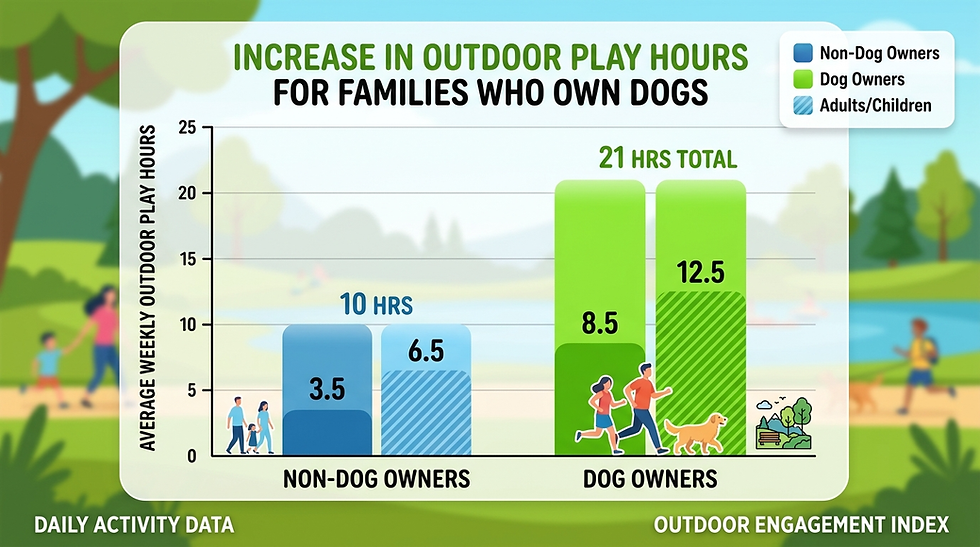
Walking the dog gets families out into the neighborhood. It gets them breathing fresh air. And when people walk their neighborhoods, they notice things. They notice if the sidewalks are dirty. They notice if the local park has enough trash cans.
Owning a dog actually makes people care more about their local environment.
The Reality of Budgets
Running community programs usually means stretching every dollar. We try to fund public parks, clean water initiatives, and local health clinics. When families take preventive steps at home, it saves the community money. Kids with strong immune systems miss less school. They require fewer doctor visits. This takes the strain off local health clinics. Parents who walk their dogs stay healthier and avoid chronic lifestyle diseases.
This frees up public health funds. We can then spend that money on bigger environmental issues. We can fix old water pipes. We can plant more trees in urban areas to improve air quality. It is a ripple effect. One good habit at home changes the whole neighborhood.
A Simple Routine
A lot of child development focuses on creating structure. Kids thrive when they know what to expect. A pet forces a daily routine. You can't hit snooze when a dog needs to go outside. You can't forget to buy food when a cat is meowing at the door. I've noticed that kids who grow up with these small daily tasks handle schoolwork better. They understand how to break big projects into small steps.
And don't worry about it being perfect. A kid might forget to fill the water bowl once in a while. Humans do it all the time. The point is the practice. They learn that their actions directly affect someone else's health. That is the exact mindset we want in public health. We want people to realize that their choices impact the community.
Caring for an animal teaches a child how to care for their world. It builds their body, calms their mind, and gets them outside.
That's how it works.
FAQs
Do pets really help build a child's immune system?
Yes. Exposure to pet microbes early in life lowers the risk of allergies and strengthens immunity.
How do animals improve mental health?
Interacting with pets releases oxytocin, which lowers stress and helps people feel happier.
Can a pet make a child more responsible?
Kids learn routines and accountability by feeding and taking care of a pet every day.
Why do public health programs care about pets?
Pets keep families active and mentally healthy, which saves community resources and lowers medical costs.
Does walking a dog help the neighborhood?
Walking gets people outside, noticing their environment and caring more about local air and parks.
Sources
Centers for Disease Control and Prevention. (2015). Pet dogs and children's health: Opportunities for chronic disease prevention? Preventing Chronic Disease 12(1).
Christian, H. (2022). Newly published study shows young children with pet dogs benefit from greater physical activity and reduced screen time. Human Animal Bond Research Institute.
Millstine, D. M. (2024). Boost your health: The benefits of having a pet. Mayo Clinic Press.
National Institutes of Health. (2018). The power of pets. NIH News in Health.
WebMD. (2023). How pets affect mental health.


