

The Longevity Quest A Modern Pursuit


The scientific advancements, lifestyle choices, and ethical considerations in humanity's pursuit of a longer, healthier life.

Humanity is crossing a threshold: for the first time, our lifespan is no longer dictated solely by biology, but by the scientific breakthroughs, the daily choices we make, and the ethical lines we decide not to cross. The quest to live longer—and live well—is reshaping medicine, culture, and responsibility in ways we’re only beginning to grasp.
Takeaways
Genetics and lifestyle both play big parts in how long we live.
New science aims to slow down how our bodies age.
Eating well and moving our bodies are crucial for a long life.
Our minds and social connections matter for healthy aging, too.
Thinking about living longer brings up important questions for society.
Introduction
I often think about why we humans are so drawn to living a long time. It’s a pursuit that has fascinated us for centuries, from ancient myths about eternal youth to today’s cutting-edge labs. The quest for longevity isn't just about adding years to our lives; it's about adding life to our years—making those extra decades healthy, vibrant, and full of purpose.
In this article, I want to pull back the curtain on this modern pursuit. We'll look at the exciting science that's changing what we thought was possible, explore the daily choices that truly make a difference, and even touch on some of the bigger questions these advancements bring up. My aim here is to give you a clear picture of what the longevity quest means right now, and what it might mean for all of us down the road.
The Biology of Aging: Why We Grow Old
Our bodies are complex machines, and like any machine, they wear down over time. This process, which we call aging, isn't just one thing; it’s a mix of many biological changes. Scientists have identified several "hallmarks of aging," which are like the key problems that show up as we get older. These include things like our cells getting damaged, our DNA not repairing itself as well, and our immune systems becoming less effective.
For instance, telomeres—the caps at the ends of our chromosomes—get shorter each time our cells divide. Once they get too short, cells can’t divide anymore and either die or stop working correctly. This shortening is a big part of why our tissues and organs lose function over time.
A deeper understanding comes from studies on cellular senescence, where cells stop dividing but don't die. Instead, they hang around and release chemicals that can harm nearby healthy cells, causing inflammation and damage throughout the body. Think of it like a few bad apples in a basket; they don't just spoil themselves, they can affect the good ones too. Scientists are now working on ways to clear these senescent cells from the body, showing promise in animal studies for improving health and extending lifespan.
The Scientific Frontier: New Ways to Extend Life
The world of longevity research is buzzing with new ideas. Scientists aren't just watching us age; they're actively looking for ways to slow, stop, or even reverse some of these aging processes. One promising area is drug development. For example, metformin, a drug commonly used for diabetes, is being studied for its potential anti-aging effects. It seems to affect how our cells use energy, which might help keep them healthier for longer. Another area is gene therapy, where researchers try to change specific genes to make cells more resistant to damage or better at repair.
Calorie restriction is another idea that's been around for a while. Studies have shown that eating significantly fewer calories, while still getting all necessary nutrients, can extend lifespan in many animals. This isn't about starvation, but careful, balanced eating. Researchers are also looking for "caloric restriction mimetics"—substances that can give us the benefits of calorie restriction without having to drastically cut food intake. Resveratrol, found in red wine, is one such compound that has gotten a lot of attention, though its effects in humans are still being researched.
Lifestyle as Medicine: Everyday Choices for a Longer Life
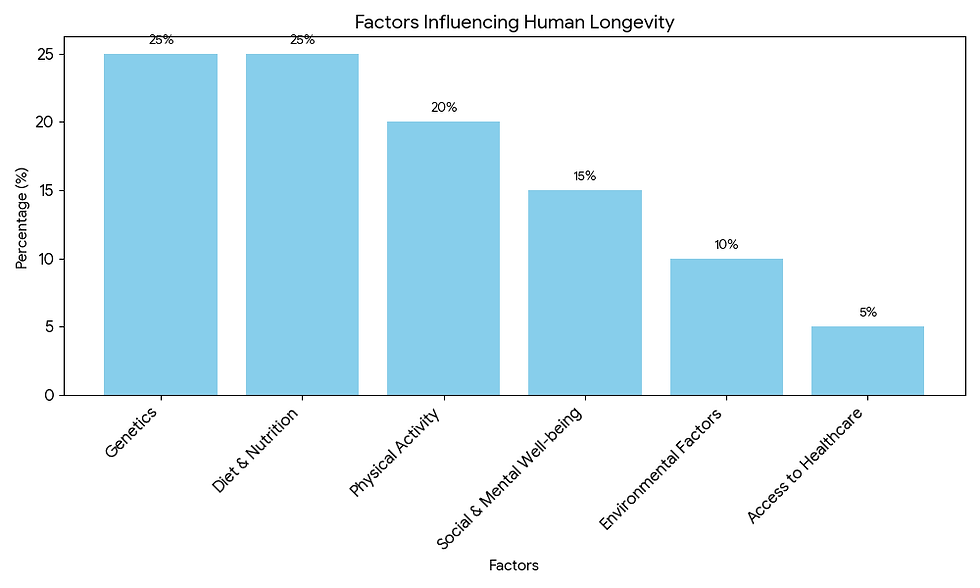
While science works on big breakthroughs, many of the most powerful tools for longevity are already in our hands—our daily habits. What we eat, how much we move, and how we handle stress all play a huge part. Eating a balanced diet, rich in fruits, vegetables, and whole grains, can reduce inflammation and protect our cells. The Mediterranean diet , for example, consistently shows up in studies linked to longer, healthier lives. Regular physical activity, whether it's walking, swimming, or strength training, keeps our hearts strong, our muscles working, and our minds sharp.
And let's not forget sleep and stress. Getting enough quality sleep lets our bodies repair and reset. Chronic stress, on the other hand, can speed up aging at a cellular level. Things like meditation, spending time in nature, or just having a good laugh can help manage stress. It’s not about finding a magic bullet, but about building a collection of healthy habits that support our bodies and minds over the long haul.
The Mind and Community: Beyond the Biological
Longevity isn't just about our physical bodies; it's deeply tied to our mental well-being and our connections with others. People who stay socially active, keep learning new things, and feel a sense of purpose tend to live longer, healthier lives. This is especially clear when we look at "Blue Zones"—regions around the world where people live much longer than average, often into their hundreds, with good health. These areas, like Okinawa, Japan, or Sardinia, Italy, share common traits: strong community ties, active lifestyles, plant-rich diets, and a sense of purpose.
Maintaining cognitive function is also a big part of healthy aging. Learning a new skill, playing brain games, or even just engaging in lively conversations can help keep our minds sharp. Loneliness and social isolation, in contrast, have been linked to poorer health outcomes and shorter lifespans, showing just how important our connections with others truly are.
Ethical Questions and the Future of Longevity
As the quest for longevity moves forward, it brings up some big questions we need to think about. If we can significantly extend human lifespan, who will have access to these technologies? Will it only be for the wealthy, creating a deeper divide in society? What about the planet—can it support an ever-growing population of very old people? And how would our social structures, our economies, and even our definition of "retirement" change? These aren't easy questions, and there aren't simple answers.
The goal isn't necessarily immortality, but rather to compress the period of illness and disability into a shorter time at the very end of life—to have a "healthspan" that matches our lifespan. As science continues to push boundaries, these ethical and societal discussions will become even more pressing. We need to consider not just if we can extend life, but how we should do it, and what kind of world we want to create for those who live much longer.
Summary
The quest for longevity is a mix of groundbreaking science and everyday habits. Our bodies age due to various biological processes, like telomere shortening and senescent cells, which researchers are actively working to counter with new drugs and therapies. Still, simple choices like eating well, staying active, getting enough sleep, and managing stress are incredibly powerful tools for a longer, healthier life. Beyond biology, our mental engagement and strong social connections play a big part in healthy aging, as seen in Blue Zones. As we get better at extending life, we also face important ethical questions about access, societal impact, and what a long, good life truly means.
Final Thought
Living longer, and living better, comes down to a blend of scientific progress and the mindful choices we make each day. It’s a journey that invites us to think not just about years, but about the richness of life itself.
Frequently Asked Questions
1. What's the difference between lifespan and healthspan?
Lifespan is simply the total number of years a person lives. Healthspan, on the other hand, refers to the number of years a person lives in good health, free from chronic disease and disability. The quest for longevity is increasingly focused on extending healthspan, so people can enjoy their longer lives with vitality.
2. Are there any specific supplements proven to extend human lifespan?
While many supplements are marketed for anti-aging, very few have strong scientific evidence to prove they extend human lifespan. Most research is still in early stages, often done in animals. It's usually better to focus on a balanced diet for nutrients than relying on supplements for longevity.
3. How much does genetics affect how long I will live compared to my lifestyle?
Genetics plays a big role—estimates suggest it accounts for about 20-30% of our lifespan. But lifestyle factors, like diet, exercise, and social connections, make up a larger portion of the picture, perhaps 70-80%. So, while you can't pick your genes, your daily choices have a huge impact.
4. What are some simple ways to improve my 'healthspan' today?
Start with small, consistent changes: try to eat one extra serving of vegetables daily, take a 15-minute walk, make sure you get 7-8 hours of sleep, and connect with a friend or family member. These small habits add up over time to make a big difference for your long-term health.
5. How might extended lifespans change family structures or careers?
If people live much longer and stay healthy, we might see significant changes. Careers could last for 60-70 years, requiring multiple "retirements" or skill changes. Family structures might involve many more generations living at once, potentially creating new support systems but also new challenges.
Sources:
López-Otín, C., Blasco, M. A., Partridge, L., Serrano, M., & Kroemer, G. (2013). The hallmarks of aging. Cell, 153(6), 1194-1215. https://www.cell.com/cell/fulltext/S0092-8674(13)00471-5
Childs, B. G., Durik, M., Baker, K. J., & van Deursen, J. M. (2015). Cellular senescence in aging and age-related disease: from mechanism to therapy. Nature Medicine, 21(12), 1424–1435. https://www.ncbi.nlm.nih.gov/pmc/articles/PMC6036815/
Barzilai, N., et al. (2016). The Targeting Aging with Metformin (TAME) study: From pre-clinical to clinical application. Aging Cell, 15(1), 19-24. https://clinicaltrials.gov/ct2/show/NCT02432287
Estruch, R., et al. (2018). Primary Prevention of Cardiovascular Disease with a Mediterranean Diet Supplemented with Extra-Virgin Olive Oil or Nuts. New England Journal of Medicine, 378(24), e34. https://www.ahajournals.org/doi/full/10.1161/CIRCULATIONAHA.119.043531
Buettner, D., & Skarica, M. (2014). The Blue Zones: Lessons From the World's Longest-Lived People. American Journal of Lifestyle Medicine, 8(5), 312–315. https://journals.sagepub.com/doi/full/10.1177/1559827614521404


