Best United States Fitness Travel Spots For Real Results


How to plan a summer trip that actually improves your physical health.

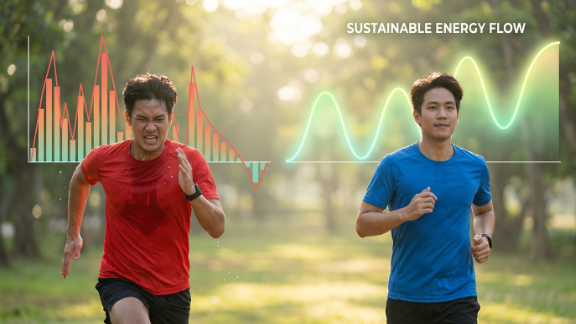
Traditional vacations often leave you feeling more exhausted. Treating your time off as a planned health intervention fixes burnout and yields a real physical return.
Takeaways
Active trips yield better physical returns.
Contrast therapy speeds up muscle recovery.
Domestic travel saves time and energy.
Tracking activity data proves your results.
Rest requires planned and measured effort.
I look at a lot of data on how people manage their health. At BioLife Health Research Center, we track what actually works to fix physical and mental fatigue.
For a long time, the standard advice for burnout was to go sit on a beach. But that approach usually fails. People return to work feeling sluggish. They just swapped an office chair for a beach chair. Their bodies never actually processed the stress.
And now, in the summer of 2026, we see a clear shift in how adults plan their time off. They choose active fitness vacations. They want physical challenges and measured recovery protocols. They treat their vacation as a scheduled health intervention.
The Data Behind the Change
This is not a random fad. A recent McKinsey report points to a massive spike in demand for in-person wellness trips. About 60 percent of people who book these trips plan to do it again. They see a return on the money and time they spend. They want to come back with better cardiovascular metrics. Lower resting heart rates. A clearer head. Sitting at a resort bar doesn't deliver those results.
An active trip forces your body to adapt. When you push your physical limits in a new location, you force your nervous system to reset. You burn off the cortisol built up from months of office work. You actually fix the chemical imbalance that causes stress.
Sedona, Arizona, for Heat and Hiking
If you want to test your endurance, Sedona is a strong choice. It has steep trails and high heat. This acts as a physical stress test. I review patient data showing how training in warmer climates forces the body to improve its cooling mechanisms.
After a few days of guided hiking in the red rocks, your baseline fitness improves.
You sweat out excess sodium and force your heart to pump more efficiently. Local centers there also have focused recovery programs. You do a hard hike in the morning. Then you go into a cold plunge in the afternoon. The contrast between the environmental heat and the localized cold application shocks your system into a deep state of repair.
Bend is built for efficiency. You can mountain bike in the morning and paddleboard in the afternoon. This mixes high-intensity interval work with low-impact steady-state cardio. When we look at joint health and long-term mobility, variety is exactly what the body needs.
You don't want to just run on a treadmill for fifty weeks a year. You need to move your body in different planes of motion. Bend provides the terrain for that. The elevation also plays a part. At over 3,600 feet, the air is thinner. Your lungs have to work a little harder. This mild hypoxic stress stimulates red blood cell production. When you go back to sea level, you feel lighter and faster. Just a biological upgrade from playing outside.
Austin, Texas, for Fuel and Functional Movement
You can't talk about a body reset
Without looking at food inputs, Austin has built an infrastructure around clean eating and functional movement. You can find high-quality protein and clean carbohydrates on almost every corner. This makes it easy to stick to a nutritional plan while traveling.
They also have a massive concentration of functional fitness gyms. You can easily drop into a kettlebell class or a mobility workshop. I like this approach for people who want to maintain their gym routine but change the scenery. You get the benefit of a new environment without losing your standard schedule. The consistency keeps your metabolism stable.
Upstate New York for Contrast Therapy
Physical effort requires a matching level of physical repair. Upstate New York has become a hub for contrast therapy retreats. This involves moving between hot saunas and freezing water. The sudden temperature shifts force your blood vessels to constrict and then dilate. This flushes metabolic waste out of your muscles.
Condé Nast recently noted this as a major travel trend. It works. I track recovery metrics for athletic programs, and contrast therapy consistently speeds up muscle repair. The heat relaxes the muscle fibers. The cold stops the inflammation. Doing this for an hour a day on vacation completely resets your physical baseline. You leave feeling physically lighter.
Tracking Your Return
You should measure the results of your trip. Bring your smartwatch or fitness ring. Look at your sleep data before you leave and compare it to your sleep after you return. Notice your resting heart rate. A good fitness vacation lowers your resting heart rate and increases the amount of deep sleep you get.
That is how you know the money was well spent. The numbers will tell you if the trip actually fixed your fatigue. Do not rely on how you feel right when you step off the plane. Look at your energy levels two weeks later. If your afternoon slump is gone and your morning focus is sharp, the intervention was a success.
Final Thought
We need to stop treating rest as a passive activity. True recovery requires planned effort. You break down the muscles in a new environment, then apply specific tools to rebuild them stronger. You come home physically tired but chemically balanced. That is the main idea.
FAQs
How much should I budget for a domestic fitness trip?
Expect to spend between $1,500 and $3,500 for a five-day domestic trip, depending on lodging choices and whether you book guided activities.
Are these trips good for beginners?
Yes. Most established fitness centers and retreats offer scaled versions of their activities for people at all fitness levels.
Do I need to hire a guide for outdoor activities?
It depends on your experience. Hiring a local guide reduces the risk of injury and saves you time trying to read trail maps.
How long should an active vacation last?
Five to seven days is the sweet spot. This gives your body enough time to adapt to a new routine without causing overtraining fatigue.
What should I pack for a contrast therapy retreat?
Bring two bathing suits, a reliable pair of sandals, and loose cotton clothing to wear between sessions to help your body regulate its temperature.
Important Health Notice: This article provides general healthcare information and should not replace professional medical guidance. For specific health concerns, always consult your healthcare provider first.
Citations
McKinsey & Company. (2024). The wellness market in 2024. https://www.mckinsey.com/industries/consumer-packaged-goods/our-insights/the-wellness-market-in-2024
Condé Nast Traveler. (2025). The biggest wellness travel trends for 2026. https://www.cntraveler.com/story/wellness-travel-trends
Global Wellness Institute. (2024). Wellness tourism economy report. https://globalwellnessinstitute.org/industry-research/wellness-tourism-2024/
Vogue. (2026). Why fitness retreats are the new luxury vacation. https://www.vogue.com/article/fitness-retreats-new-luxury-vacation
American College of Sports Medicine. (2025). Worldwide survey of fitness trends. https://www.acsm.org/education-resources/acsm-blog/detail/acsm-blog/2025/01/01/worldwide-survey-of-fitness-trends-for-2025