

The Digital Mind: From the Failed Human Brain Project to a New Era of Neuroscience

Updated: Apr 12
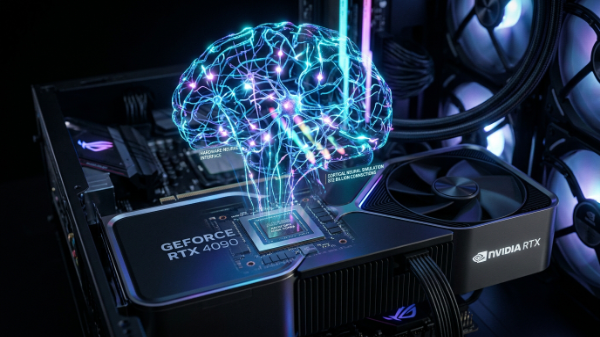
Why mapping 20 billion neurons may be the breakthrough that finally unites biology, psychology, and computation

The human brain, with its 86 billion neurons, represents the most complex system in the known universe. For decades, creating a functional digital model has been the ultimate goal of neuroscience—a goal that remained stubbornly out of reach. Until now.
Takeaways
GPUs now simulate up to 20 billion neurons, breaking past limits that stalled earlier brain models.
But without a full connectome — the brain’s wiring map — the simulation remains incomplete.
A digital brain finally lets us model how neural structure, biology, psychology, and social forces interact.
Researchers will be able to simulate disorders, test virtual drugs, and model therapy effects before human trials.
We’re shifting from observing the brain from the outside to modeling it from the inside — a new era for neuroscience.
The human brain, with its 86 billion neurons, represents the most complex system in the known universe. For decades, creating a functional digital model has been the ultimate goal of neuroscience—a goal that remained stubbornly out of reach. Until now. A recent breakthrough in exascale supercomputing, using massively parallel graphics processors, has allowed researchers to simulate a neural network of 20 billion neurons. This is a landmark achievement. But its true significance is not merely computational; it is the culmination of efforts that provide us with a tool to finally understand the intricate dance between our biology, our psychology, and our environment.
The Science: From Centralized Bottlenecks to Parallel Processing
To appreciate this breakthrough, we must first understand the historical context. The most famous attempt to model the brain was the ambitious, decade-long Human Brain Project (HBP), which ended in 2023. Despite enormous funding, it fell short of its primary goal. The HBP represented a diagnostic bottleneck in neuroscience; it relied on a centralized computing architecture where the sheer volume of communication required between simulated neurons overwhelmed the system. The hardware simply could not keep up with the brain’s parallel nature.
The new approach circumvents this problem entirely. Instead of one massive, centralized processor, the simulation runs on thousands of smaller, interconnected Graphics Processing Units (GPUs). This is the key.
The Old Model (Centralized Processing): Imagine trying to manage the traffic of New York City through a single, massive intersection. No matter how big you make it, it will always jam. This was the HBP’s communication bottleneck. Data from billions of neurons had to travel back and forth to a central hub, creating an impossible traffic jam.
The New Model (Parallel GPU Processing): Now, imagine every neighborhood in New York City having its own local road network, only connecting to the main highway when absolutely necessary. This is massively parallel local processing. Each GPU simulates a small cluster of neurons and handles their local connections independently, reducing the communication bottleneck. This approach has been validated in large-scale simulations, proving its efficiency
The hardware is almost ready. But the software is not. We have built a machine capable of simulating the brain’s architecture, but a critical piece of the puzzle is missing: the connectome. The connectome is the complete, neuron-by-neuron wiring diagram of the brain. Without it, our 20-billion-neuron simulation is like a supercomputer with no operating system. We have the processors, but we don’t have the code that dictates how they connect and communicate.
An Expert's Perspective: The Digital Brain and the NBPS Model
This is where the breakthrough intersects with clinical reality. For decades, the most effective framework for understanding human health has been the Neural-Biopsychosocial (NBPS) model. It posits that any condition—from depression to chronic pain—is the result of a dynamic interplay between our Neural architecture (N), our broader Biology (B), our Psychological state (P), and our Social environment (S). Historically, the "N" has been a black box. We could observe its outputs, but we couldn't model its mechanics.
A functional digital brain changes everything. It provides, for the first time, a testable platform to see the cascading effects of the NBPS model in action.
Modeling the "Neural" Foundation: The simulation provides the anatomical and electrical bedrock (the "N"). We can build a digital architecture that mirrors the human brain, allowing us to see how information flows through different circuits.
Introducing "Bio-Psycho-Social" Variables: We can then introduce variables and observe their effects. For example, we can simulate the "B" by altering the levels of a virtual neurotransmitter like serotonin and watch how it changes the entire system's firing patterns. We can model the "S" by simulating social isolation—drastically reducing sensory input to the model—and see which neural pathways weaken. We can model the "P" by simulating a traumatic memory as a hyper-sensitized, repeating neural loop and study its impact on the rest of the digital mind.
Validating Therapeutic Interventions: We can model how an intervention targeted at one level of the NBPS model affects the others. For example, we can simulate cognitive behavioral therapy (CBT) by repeatedly activating new, healthier neural pathways and observe if they become dominant over older, pathological ones, a digital representation of synaptic plasticity
This is the power of a digital brain. It democratizes experimentation. It allows us to move beyond correlation (e.g., fMRI scans showing a brain area lighting up) to causation, by building the system from the ground up and manipulating its variables directly.
The Road Ahead
We are entering an unprecedented age of neurological insight. The computational breakthrough is a game changer, but the greatest hurdle remains:for modeling the direct interplay among mapping the human connectome. This is a data collection problem of staggering proportions, but projects are underway. Once we have that map, we can truly begin to build a digital mind.
We must be prudent. The ethical implications of a functional brain simulation are profound, touching on questions of consciousness, identity, and data privacy. But the potential clinical impact is undeniable. For centuries, we have treated the brain from the outside. The culmination of this research allows us to finally get inside, providing a tool to understand the complex pathology of mental illness and develop the precise, targeted interventions of tomorrow.


