

Understanding The Shifting Landscape Of Medicare Advantage


Major Insurers Are Protecting Their Profits By Quietly Cutting The Extra Benefits You Rely On

While your Medicare Advantage premium may look cheaper this year, hidden costs buried in the fine print could cost you thousands.
Takeaways
Premiums drop, but coverage gets worse.
Companies prioritize profit over new members.
Dental and extra perks are shrinking.
Out-of-pocket maximum limits are rising.
Always check your plan before renewing.
The Hidden Cost Of Stable Premiums
My work usually involves running clinical studies and translating complex medical findings into reports that help improve human health. My research spans private companies and the public sector, including BioLife and its subsidiaries. But part of my job also means understanding how people actually pay for their care.
If a patient can't afford treatment, even the best medical science in the world won't help. So I keep a close eye on Medicare Advantage. And right now, we're seeing a massive shift for 2027.
The government recently announced that Medicare Advantage premiums are dropping to an average of 12 dollars a month. The Centers for Medicare and Medicaid Services says your choices are completely stable. But I talk to healthcare analysts who review the plan documents. The reality on the ground is entirely different. We're facing a hidden wave of benefit cuts. Major insurers are reacting to skyrocketing medical costs.
They're shrinking their provider networks and increasing out-of-pocket costs for the people who need care most.
Choosing Profit Margins Over New Members
Here's what happened over the last two years. People started going to the doctor a lot more. During the pandemic, everyone stayed home. They delayed necessary treatments. Once things opened up, they finally felt comfortable scheduling elective surgeries.

They went in for hip replacements, heart procedures, and routine cancer screenings. This is good for public health. We always want people to get the care they need. But insurance companies had to pay out billions more than they projected. It squeezed them incredibly hard.
So the payers are changing their tactics. For a long time, these companies aggressively competed to get as many new members as possible. They offered flashy perks to get you to sign up and switch plans every single year. Now they're stepping back. They're focusing on protecting their financial margins instead of chasing growth.
You see this trend clearly with the big four carriers. Clover Health, UnitedHealthcare, Humana, and Centene are all pulling back. They've decided it's better to have fewer members if it means protecting their profit margins. It is a strict business decision.
The Extra Perks Are Shrinking Fast
The easiest way for an insurance company to save money is to cut the supplemental benefits. These are the extra perks that original Medicare doesn't cover. I'm talking specifically about dental allowances, vision care, and hearing aids. Many major carriers are heavily slashing these benefits across the board. You might have had $1,000 for dental work last year. You might only get half of that in 2027.
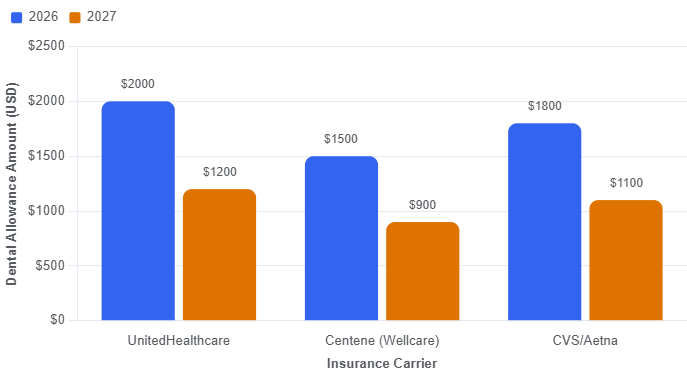
And the networks are shrinking. Insurers are moving toward narrower doctor and hospital networks. This directly limits where you can get care. You might find out your favorite local specialist isn't covered anymore. You might have to drive forty miles to see an approved doctor.
Think of it like buying a box of cereal. The box looks exactly the same size. The price is exactly the same. But when you open it, the bag inside is only half full. We call this shrinkflation at the grocery store. It's happening to your health insurance right now.
Alexis Levy is a senior partner at HealthScape Advisors. She summarized what's happening in a recent report. She pointed out that a senior might keep the same plan name as the previous year. But keeping the plan name doesn't mean keeping the same level of benefits. The plan's real value is dropping out from under you.
The Bill Gets Passed To You
I want to be clear about the costs you'll face. The good news is that primary care co-pays are generally staying the same. You won't pay more just to see your regular doctor. And the average monthly premiums remain steady or even slightly lower.
But you have to look at the hidden costs. The general cost-sharing requirements are rising. You'll likely pay more when you need a specific blood test, an MRI, or a hospital stay. The companies simply shifted the financial risk to the days you actually get sick.
Take Clover Health as a prime example. Analysts recently reviewed their updated plans for the upcoming year. Clover raised the maximum out-of-pocket limit by $1,144 for the members they sampled. That's a massive spike. If you have a bad health year, that entire burden shifts directly to your wallet.
I see this in my clinical studies. I work with a patient. He signed up for a zero-premium plan last year because it offered great dental coverage and a broad network of local specialists. This year, his plan cut the dental allowance and dropped his cardiologist from the network. The premium is still zero. But the plan is practically useless to him now. He has to start over.
There's one notable exception to this trend. Humana is the lone major holdout that protected its dental allowances. They adjusted their margins in other ways but kept those specific perks intact.
Actionable Next Steps For Seniors
A stable monthly premium doesn't mean you have stable coverage in 2027. The entire structure of these plans is changing behind the scenes.
Please don't just let your current plan automatically renew. You need to review the updated evidence of coverage document that comes in the mail. It explains exactly what's changing in your specific policy.

You can also use the Medicare Plan Finder tool on the official government website. Enter your regular medications to see what your total out-of-pocket cost will be for the year. Actively audit those cost-sharing numbers before you lock into a choice. Let me know if that makes sense.
FAQs
Q: When is the open enrollment period for Medicare Advantage?
A: You can change your plan between October 15 and December 7 each year.
Q: Can I switch back to original Medicare if I do not like my new plan?
A: Yes. You can return to original Medicare during the annual open enrollment period.
Q: What is a maximum out-of-pocket limit?
A: It is the absolute highest amount you will have to pay for covered medical services in a single year.
Q: Do all Medicare Advantage plans include prescription drug coverage?
A: Most of them do include drug coverage. But you should still check the specific plan details to be sure.
Q: Does the government regulate how much an insurer can cut benefits?
A: The government sets strict minimum coverage standards. Insurers can adjust extra perks and copays as long as they meet those minimums.
Sources
Catherman, C. (2026, October 16). Medicare Advantage plan benefits, options shift in 2027. Healthcare Brew. https://www.morningbrew.com/healthcare/stories/2026/10/16/medicare-advantage-plan-benefits-options-shift-in-2027
Centers for Medicare & Medicaid Services. (2026, April 6). Announcement of Calendar Year (CY) 2027 Medicare Advantage (MA) Capitation Rates and Part C and Part D Payment Policies. CMS.gov. https://www.cms.gov/files/document/2027-announcement.pdf
Eastabrook, S. (2026, February 26). Medicare Advantage health plan outlook for 2027. HealthScape Advisors. https://healthscape.com/insights/medicare-advantage-health-plan-outlook-for-2027/
Minemyer, P. (2026, October 9). Humana rebounds, Aetna slips: Winners and losers in the 2027 MA star ratings. Fierce Healthcare. https://www.fiercehealthcare.com/payers/humana-rebounds-aetna-slips-winners-and-losers-2027-ma-star-ratings
Tepper, T. (2026, October 15). Your $0 Medicare Advantage Plan Just Got Worse. Check These 5 Things Before Dec. 7. Money Talks News. https://www.moneytalksnews.com/your-0-medicare-advantage-plan-just-got-worse-check-these-5-things-before-dec-7/
Medical Disclaimer
This information is for educational purposes only and is not a substitute for professional medical advice, diagnosis, or treatment. Always consult a licensed healthcare provider before making health decisions, using wearable devices, or sharing personal medical data.
About the Author
 | Larrie Hamilton, MHS, is a medical scientist at BioLife Health who combines strong research expertise with a commitment to clear and accessible communication. His work advances human health through innovative scientific inquiry by conducting clinical studies that explore new methods to improve wellness and patient outcomes. Larrie is dedicated to expanding medical knowledge and shaping a healthier future. |

The Tapestry of Memory: Unraveling the Threads of the Mind

The Tapestry of Memory is not just a book. It's an invitation to a transformative journey. Discover the hidden wonders of your mind and build an improved memory that will astound you.
Dr. David Priede, PhD, a prominent neuroscientist and brain health expert, explores memory in this engaging book. Drawing on extensive research, he explains how our experiences, emotions, and lifestyle choices shape our minds.
This book is filled with practical tools and strategies designed to help you nurture your memory and protect your cognitive health for years to come. You will learn how to optimize brain function, combat memory decline, and build resilience against age-related changes. It's your essential guide to understanding and enhancing your most valuable mental asset.


